

Don Johnson's Cumberland Motors - Can the 2027 Ford Super Duty F-350 Tow Heavy Equipment Around Rice Lake, WI?
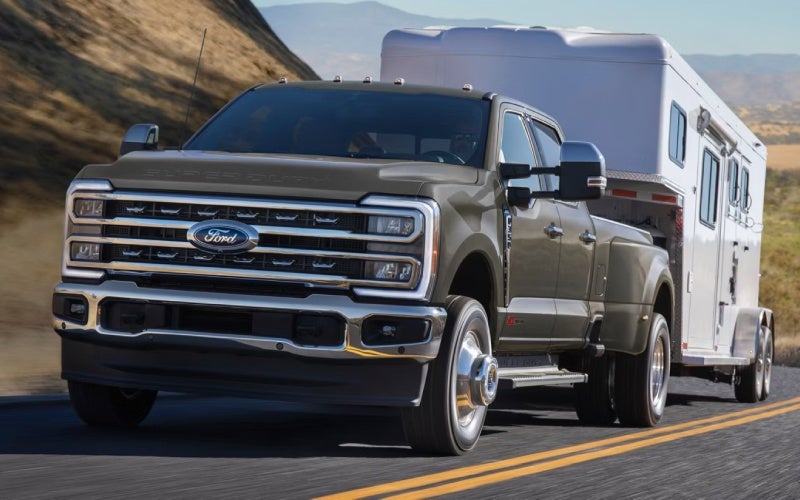
Heavy-duty truck shoppers around Rice Lake, WI, often need a clear answer before moving deeper into the buying process: can the 2027 Ford Super Duty® F-350® handle the kind of equipment, trailers, and payload demands that come with real work? The answer depends on configuration, but Ford gives the Super Duty® lineup serious capability to work with, including best-in-class maximum available towing of up to 40,000 lbs when properly equipped and best-in-class maximum available payload of up to 7,900 lbs when properly equipped.
That capability matters for contractors, farmers, landscapers, property owners, and recreational haulers who need more than a light-duty pickup. The F-350® is designed for people who think in terms of trailer type, tongue weight, axle ratio, bed length, cargo load, passenger count, and daily usability. Don Johnson's Cumberland Motors helps shoppers compare these details in a way that connects the truck’s specifications to the jobs and routes they actually face while serving Turtle Lake, Rice Lake, and Almena, WI.
Why Configuration Matters for Heavy Equipment Towing
The Super Duty® F-350® is not a one-size-fits-all truck. It can be configured in many ways, and those choices directly affect towing capacity. Ford notes that maximum towing depends on cab size, engine type, drivetrain, axle ratio, Gross Combined Weight Rating, payload capacity, accessories, and towing-related equipment. In everyday terms, two F-350® trucks may look similar from across a parking lot, but their real towing numbers can be very different.
For shoppers pulling skid steers, compact tractors, construction materials, livestock trailers, large boats, or enclosed equipment trailers, the key is to begin with the trailer and work backward. Know the loaded trailer weight, not just the empty trailer rating. Add attachments, fuel, tools, spare parts, cargo, passengers, and any bed-mounted equipment. Once the real-world load is clear, it becomes much easier to choose the engine, hitch setup, wheel configuration, and package content that fit the job.
Gas or Diesel: Which Engine Fits the Job?
The standard 7.3L 2V DEVCT NA PFI V8 Gas engine is a strong choice for many owners. Ford lists this engine at 420 horsepower at 5,350 rpm and 445 lb-ft of torque at 4,250 rpm. It is standard on F-350® XL, XLT, Lariat®, King Ranch®, and Platinum® models, giving shoppers a powerful foundation across the lineup. For many businesses and personal-use buyers, the gas V8 offers the right balance of capability and simplicity, especially when payload is a major priority.
The available 6.7L High-Output Power Stroke® V8 Turbo Diesel B20 engine is built for shoppers who regularly tow heavy. Ford lists this engine at 500 horsepower at 2,600 rpm and 1,200 lb-ft of torque at 1,600 rpm. That low-rpm torque is especially helpful when pulling a heavy trailer from a stop, climbing grades, or maintaining confidence with a substantial load. When properly equipped, the diesel engine helps support the Super Duty® lineup’s top available gooseneck towing capacity of up to 40,000 lbs.
- Choose gas when: Your work emphasizes payload, moderate towing, daily driving, or a straightforward heavy-duty setup.
- Choose diesel when: You tow near the upper range of capability, pull frequently, or need maximum torque for demanding loads.
- Compare both when: Your needs overlap between heavy payload and heavy towing, because configuration details can influence the better fit.
After narrowing the engine, the next step is understanding hitch type. Ford lists maximum available towing by setup: gooseneck up to 40,000 lbs, 5th wheel up to 35,000 lbs, and conventional towing up to 30,000 lbs when properly equipped. This is why buyers should not rely only on a single maximum number. The trailer connection style is just as important as the engine.
Single Rear Wheel or Dual Rear Wheel
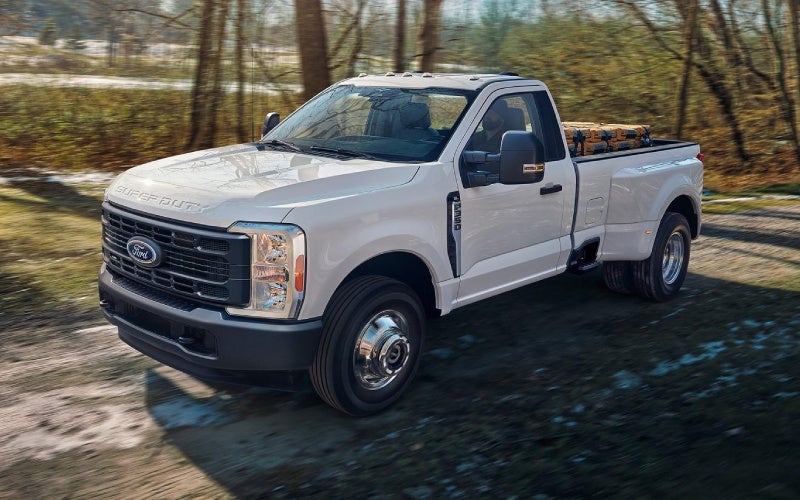
Another major decision is single rear wheel versus dual rear wheel. Ford explains that single rear wheel models have one wheel on each side of the rear axle and are well suited for light to moderate towing and everyday driving because they offer better maneuverability. Dual rear wheel models place two wheels on each side of the rear axle and are ideal for heavy-duty towing and hauling due to greater stability, higher towing and payload capacity, and improved weight distribution.
For a shopper using the truck around town, at job sites, and on narrower roads, single rear wheel may feel easier to live with. For a buyer who regularly pulls heavy gooseneck or 5th wheel trailers, dual rear wheel capability can provide added confidence. This is not just about maximum capacity; it is also about how stable the truck feels while managing side loads, trailer movement, and uneven surfaces.
Technology That Helps When Towing
Modern Super Duty® towing is not only about engine output. Ford offers helpful available technology designed to make big-truck tasks more manageable. Available PowerScope® trailer tow mirrors can improve rearward visibility, while available LED sideview-mirror spotlights and security approach lamps add practical lighting around the vehicle. Available trailer reverse guidance can help when backing a trailer, and the available 360-Degree Camera provides a bird’s-eye view that can be useful in tight spaces.
Tow/Haul mode is another important tool. Ford describes it as a drive setting engineered to optimize vehicle performance and control when carrying heavy loads or pulling a trailer. It adjusts transmission shift points, helps prevent gear hunting, supports strong acceleration when climbing grades, and enhances engine braking on descents. For drivers moving equipment across changing terrain, those adjustments can make the truck feel more composed.
- Visibility support: Available PowerScope® trailer tow mirrors and camera views help drivers monitor surroundings.
- Backing assistance: Available trailer reverse guidance can support more confident trailer maneuvering.
- Control under load: Tow/Haul mode helps the transmission and engine braking respond to towing demands.
- Cab information: Available head-up display and SYNC® 4 with a 12" center display help keep key information accessible.
Beyond trailering, the F-350® also supports work after the tow is complete. Available Pro Power Onboard™ - 2 kW can supply power through in-bed outlets, which is useful for certain tools or equipment away from a fixed power source. Integrated box side and rear corner steps make it easier to access the bed when loading, securing, or retrieving cargo.
How to Prepare Before You Shop
Before comparing trims, gather the facts that determine your ideal truck. Bring the loaded weight of your trailer, the type of hitch you use, your expected bed cargo, and the number of passengers typically riding with you. If you tow multiple trailers, document each one. A truck that fits your largest regular load may be different from one selected around an occasional lighter trailer.
- Confirm trailer weight: Use the loaded weight, including equipment, attachments, fuel, and cargo.
- Identify hitch type: Gooseneck, 5th wheel, and conventional towing each have different maximum available ratings.
- Estimate payload: Include passengers, tools, bed cargo, upfits, and trailer tongue or pin weight.
- Choose maneuverability needs: Decide whether single rear wheel or dual rear wheel better fits your parking, road, and jobsite conditions.
- List technology priorities: Note whether camera systems, mirrors, connectivity, and driver-assist features are must-have equipment.
With those details ready, the shopping process becomes much more productive. Instead of asking whether an F-350® can tow, you can ask which F-350® configuration is best suited for your specific trailer and workload. That is the difference between buying a capable truck and buying the right capable truck.
Frequently Asked Questions:
What is the highest available towing capacity for the 2027 Super Duty®?
Ford lists the highest maximum available towing capacity at up to 40,000 lbs with gooseneck towing when properly equipped. The lineup also lists up to 35,000 lbs for 5th wheel towing and up to 30,000 lbs for conventional towing when properly equipped.
Is the available diesel engine necessary for towing heavy equipment?
Not always, but the available 6.7L High-Output Power Stroke® V8 Turbo Diesel B20 engine is the better fit for frequent heavy towing and maximum available capability. Its 1,200 lb-ft of torque at 1,600 rpm is especially valuable for demanding trailer work.
Should I choose dual rear wheel for heavy towing?
Dual rear wheel models are often preferred for heavy-duty towing because they can provide greater stability, improved weight distribution, and higher towing and payload capacity. Single rear wheel models may be easier to maneuver for lighter or more mixed-use needs.
What should I bring when discussing towing needs?
Bring trailer weight, hitch type, payload estimates, passenger count, and details about any cargo or equipment you carry in the bed. These details help match the truck configuration to your actual use instead of relying on broad estimates.
The 2027 Ford Super Duty® F-350® is built for shoppers who need confidence, but the best results come from matching the truck to the job. With the right engine, hitch setup, wheel configuration, cab, bed, and technology, the F-350® can be a powerful partner for heavy equipment towing around Rice Lake and the surrounding area.